

One minute you’re moseying through the sun-bleached grid of Kure Beach, and the next, you’re fixin’ to drive straight into what is, for all intents and purposes, a giant sandbox. Our new Jeep Wrangler, bought in a fit of “we’re coastal folks now!” optimism, was idlin’ while we hunkered down by the front tire. We were lettin’ the air out while a seasoned local in a rusted-out Ram 2500 watched us with the kind of “bless your heart” smirk only a long-time Carolina Beacher can master.
“Y’all know what you’re doin’ with that thing, right?” he asked, leanin’ out the window.
We gave him a nod. Confidently. Incorrectly.
Welcome to the Fort Fisher State 4WD Beach — the place where the locals thrive, the tourists lose their ever-lovin’ minds, and the sand eats rental cars for breakfast.
Fort Fisher’s 4WD Beach
We were greener than a June bug when it came to sand driving. Truth be told, those first few trips out to the Fort Fisher strand were flat-out hair-raisin’. You can go ahead and forget that “smooth-as-butter” glide they promise in the TV commercials. Driving on the beach is a high-stakes haggle between momentum, physics, and having the backbone to stick with it. That first stretch of deep, thick sand near the gate felt like trying to navigate a bowl of wet concrete. The steering wheel was jerkin’ like a hooked marlin, and while the engine was hollerin, that Jeep wasn’t doin’ much besides sinking. We made the ultimate rookie move, got spooked and floored it. Those tires did exactly what they were born to do on a paved road – they grabbed for traction — but in that soft sugar, they just turned into high-speed shovels, burying us up to the axles before I could say “Lord have mercy.”
Once you actually make it onto the beach, the game changes from “don’t sink” to “don’t get squeezed.” Fort Fisher ain’t no interstate, let me tell ya; it’s a livin’, breathin’ thing that shifts with every tick of the clock. We learned real quick to keep that tide chart tucked in the visor like it was the Holy Gospel.
Low tide, when the ocean pulls back and leaves you a nice, wide strip of hard-packed sand – that’s your fast lane, where you can cruise along at a cool 15 mph without breaking a sweat. But you best keep an eye on that high tide. When the water starts marching back in, it crowds everybody up into the soft and shifty sand. Those passes get tighter than a tick on a hound dog, sometimes leaving you barely a hair’s breadth between the dunes and the breaking surf.
One of our first “come to Jesus” moments happened when we got caught in one of those narrow spots with the tide humming in. That Atlantic was looking uncomfortably close, let me tell you. When you’re driving and the waves are washing right up against your floorboards, spitting salt spray on your doors, you start feeling real small — real fast. The trick is to keep your feet moving and maintain that momentum. If you have to pass someone, you use your blinker to claim your rut and you move like you mean it.
We eventually caught on, but we paid for that schoolin’ in a heap of humility, a whole lot of sweatin’ over a shovel, and the sinkin’ realization that, for a minute there, we were the free afternoon show for the locals.
The Locals Will Roast You
Do something stupid and you will find yourself smack-dab on Idiot Spotter, the Facebook group where locals spend their afternoons roasting anybody brave (or dumb) enough to attempt Fort Fisher in a sedan, a crossover, or anything with “sport” in the name. It is a treasure trove of daily photos featuring tourists and the occasional overconfident transplant (… clears throat…) who thought their front-wheel-drive Toyota Camry could outsmart a barrier island.
You’ll see them right there in high-definition: bottomed-out on the access ramp, high-centered on a dune like a beached whale, or worst of all, bogged down while the tide is marchin’ in to claim its prize. Since the park rangers aren’t in the business of playin’ tow truck for non-emergencies, these folks usually end up shellin’ out hundreds of dollars to have a specialized recovery service winch them out of their own poor decisions. It’s an expensive way to become local famous.
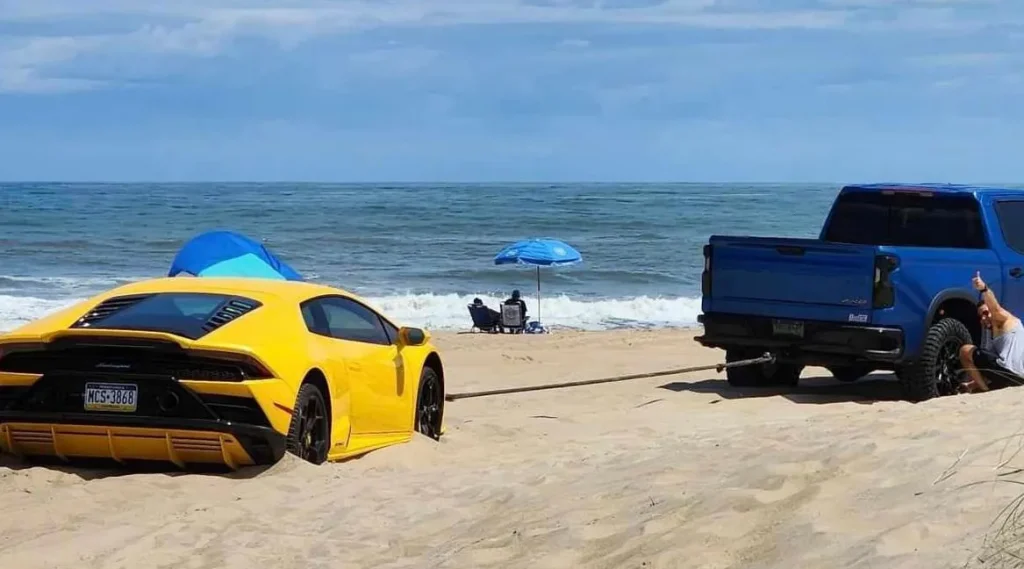
Don’t be that guy.
The Rules of the Sand
To handle the Fort Fisher strand, you need a vehicle with some actual grit—a true 4-wheel-drive with enough ground clearance to keep your belly off the sand. Jeeps, Broncos, and full-sized pickups are the kings of the castle out here. Now, don’t go thinkin’ your All-Wheel-Drive crossover is up for the task; those systems usually give up the ghost because they lack the low-range gears and locking differentials needed to keep your wheels from spinnin’ uselessly in the deep sugar.
The single most important rule of the road—or lack thereof—is “airing down.” Before you even think about touchin’ the sand, pull into that designated lot and drop your tire pressure to about 18–20 psi. By stretchin’ out that tire’s footprint, you’re teachin’ your vehicle how to float across the top of the sand instead of tryin’ to dig a hole to China. Forgetting this little ritual is the number one reason folks end up stuck and lookin’ sheepish before they even get a whiff of the salt air.
Air Down
Before those tires of yours even think about touching the sand, you pull into that lot and drop ’em down to 18–20 psi. Now, this isn’t just a friendly suggestion; it’s non-negotiable. Around these parts, airing down is practically a religion. Those deflated tires spread out wide, giving you the flotation you need to glide along instead of digging yourself an early grave in the sugar sand.
Pro Tip from the Locals: Do yourself a favor and pack a portable air compressor in the back. You want to be able to reinflate right there at the gate before you head on home. Trust me, the Sheetz is the last place on earth you want to be caught hoggin’ the air pump while a line of locals stands by, judging your every move.
4WD Only
AWD is the participation trophy of the off-roading world. If you want to tackle the Fort Fisher strand, you’re going to need the real deal: low-range gearing, locking differentials, enough ground clearance to clear a beach ball, and a vehicle that doesn’t start whimpering the second its tires hit the sand. Out here, “all-wheel-drive” is just a fancy way of saying you’re fixin’ to get stuck.
Think: Wrangler, Bronco, Tacoma, 4Runner, F‑150, Silverado.
Not: Subaru Outback, Honda CR‑V, Tesla anything.
Know the Tides
Low tide is the “express lane”—that beautiful stretch of smooth, hard-packed sand that makes you feel like a pro. But high tide? Well, that’s the “good luck, buddy” lane. You’re forced up into the soft, deep sugar with cliffs of dunes on one side and the Atlantic breathing down your neck on the other.
We misjudged the tide once and ended up driving with the waves slapping the Jeep doors like they were trying to invite themselves in for a ride. Let me tell you, nothing humbles a person faster than realizing the entire Atlantic Ocean is closer to your passenger seat than your own cupholders.
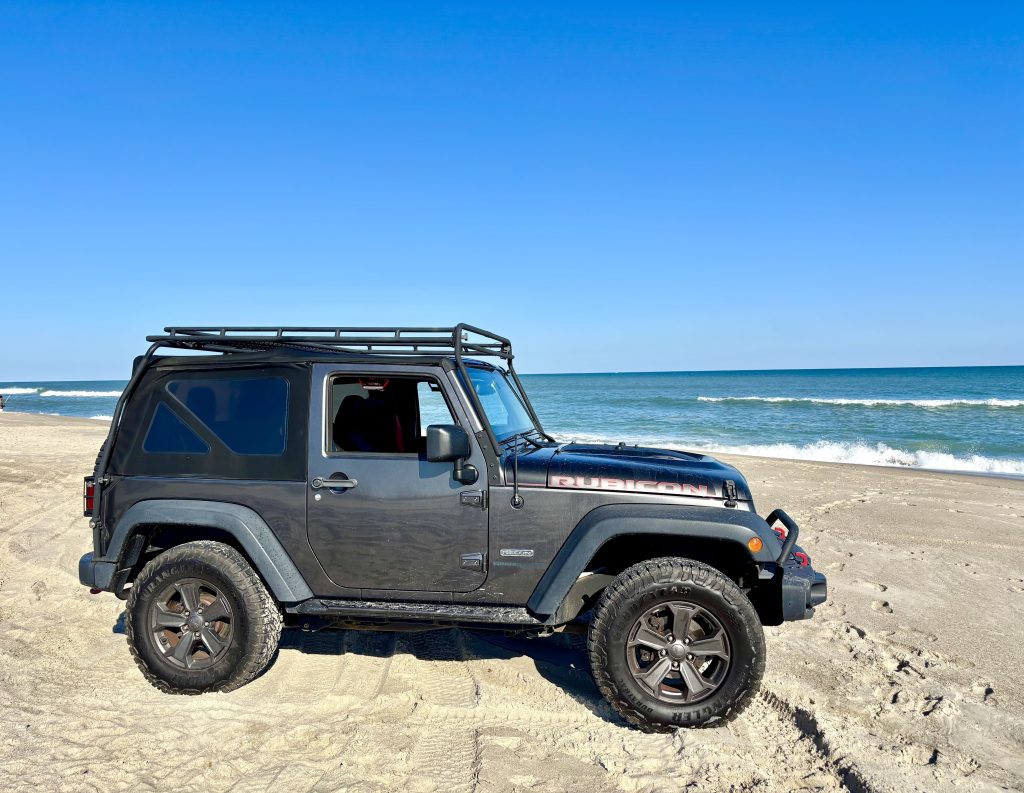
What to Do if You Get Stuck
Listen, even if you are as careful as a cat on a tin roof, the sand might still get the better of you. You will feel that engine start to bog down, and your heart will drop right along with it. The best advice I can give is pure “common sense” that feels completely backwards: STOP. Do not spin those tires. All you are doing is digging a deeper hole and fixing to high-center your chassis until you are stuck as a literal lawn ornament.
Step 1: Admit It, You’re Stuck, Honey
The sooner you make peace with your predicament, the less digging you have to do later. Spinning your tires is just a one-way ticket to being the star of someone’s “Idiot Spotter” post by suppertime.
Step 2: Back Out Like a Badass
Try reversing along the very tracks you just made. If that does not work, it is time to get your hands dirty.
Step 3: Grab Your Shovel (You did bring one, didn’t you?)
Clear the sand from around all four tires and from under the frame or axles where you are hung up. You need to be digging like you are escaping Shawshank and the warden is knocking on the cell door.
Step 4: Drop (the Pressure) Like It’s Hot
Take it on down to 15 psi. If you are feeling truly desperate, try 12 psi—just be careful not to make any sharp turns or you will pop a bead off the rim and have a whole new heap of trouble on your hands.
Step 5: Serious Tread Appeal
MAXTRAX is the gold standard, but in a pinch, your vehicle’s rubber floor mats shoved firm under the drive tires can provide just enough friction to pop you out of that hole.
It’s Legal to Go Topless
Once you finally get the hang of this beach driving business, the reward is pure, unadulterated freedom. Around these parts, the real local tradition isn’t just about the driving; it is all about the vibes.
We eventually got our setup down to a fine science. We would mosey along parallel to the ocean until we found a perfect little patch of paradise to stake our claim. We would plant those 12-foot surf rods deep in the sand and settle in to wait for the drum to start biting. We even figured out how to use customized sand anchors to string a hammock right between the Jeep’s roll bars.
Being able to spend the entire day with your cooler, your chairs, the fam and the dogs —miles away from the huddle of the public access crowds— is a luxury that money just can’t buy. It is enough to make a person never want to see a paved road again.
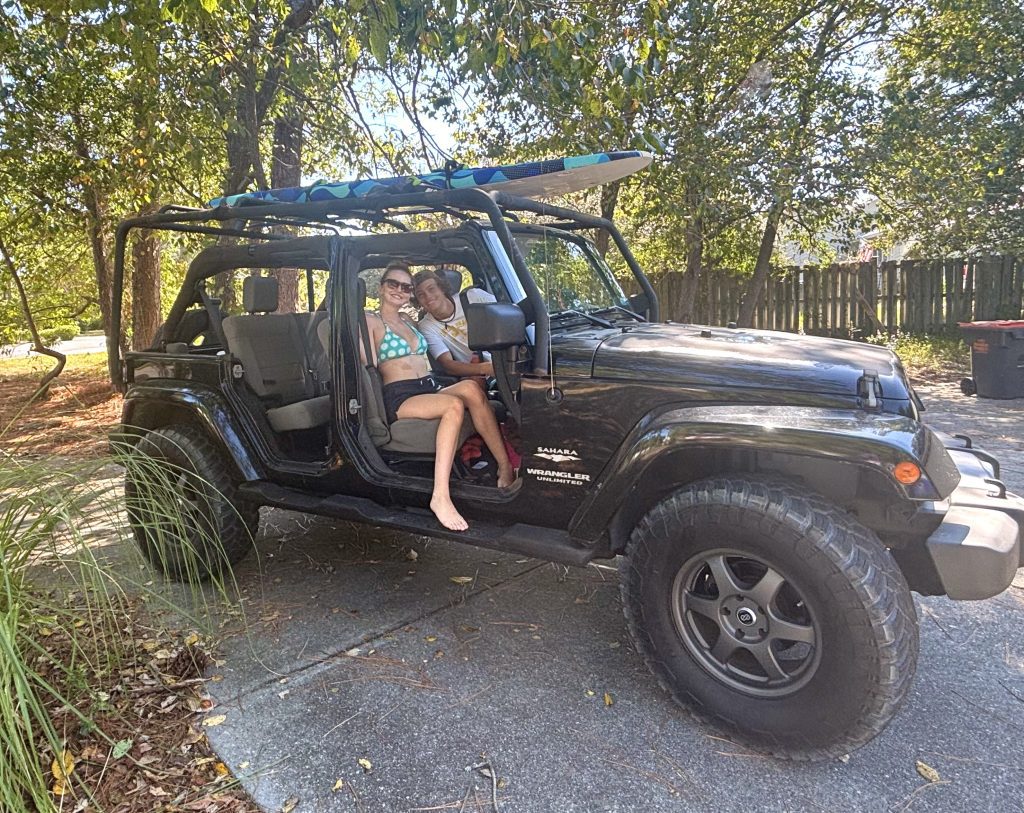
If we wanted a roof over our heads, we would have stayed home.
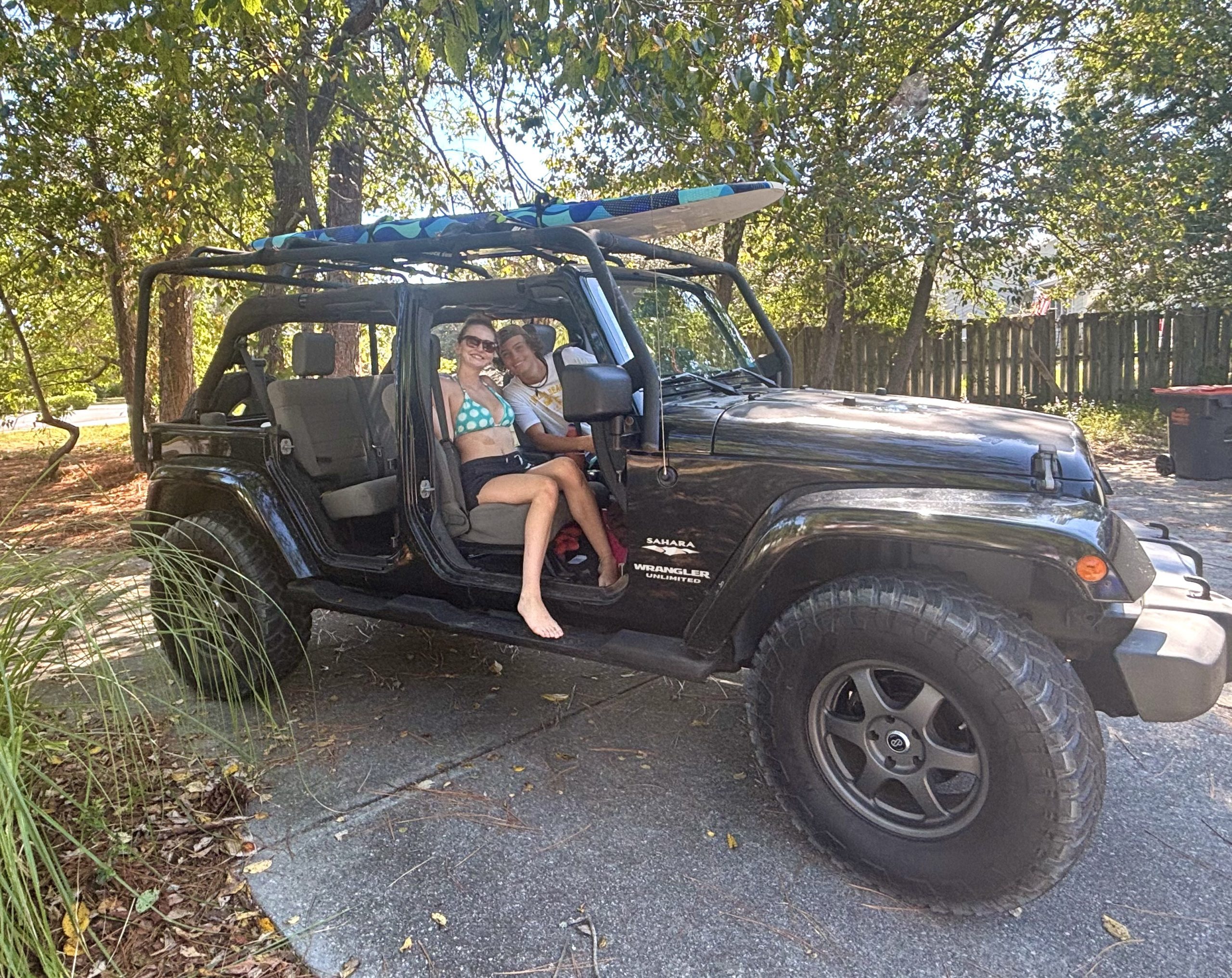
In North Carolina, the best-dressed Jeeps are the ones wearing nothing but a surfboard and a thin coat of Atlantic salt.
Don’t Be the Reason They Ban Beach Driving
Fort Fisher is a fragile ecosystem. Treat it like a privilege, not a playground. That privilege comes with a shared responsibility. The dunes and maritime forests are not just background scenery; they are critical barriers against storm surges and vital habitats for endangered species.
- Environmental Impact: The single most important rule is NEVER DRIVE ON THE DUNES. One pass can destroy stabilizing vegetation that took decades to grow, leading to massive erosion.
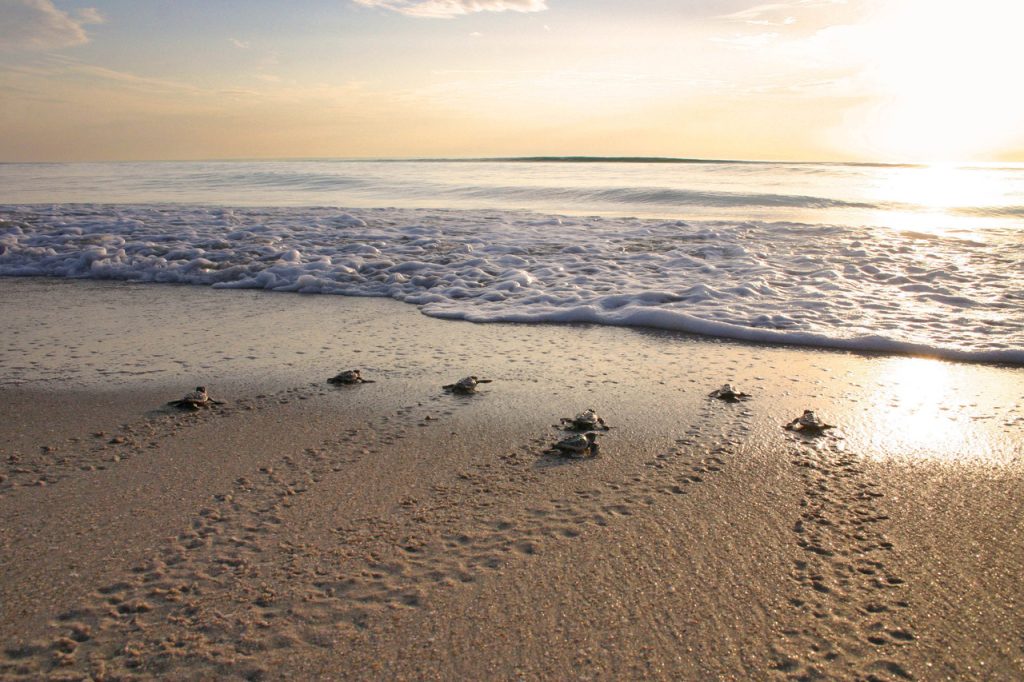
- Wildlife Protection: Be extremely vigilant during nesting season (roughly May through August). Specialized shorebirds like the piping plover and green sea turtles use this beach. Rangers will often mark off nesting areas with ropes and signs. Give these areas a wide berth.
- Leave No Trace: Everything you bring in must come out. This includes charcoal ash, which can be highly toxic to the marine environment if left on the sand. Use a portable ash can or a specialized container to pack out your grill remains.
One of the Best “Thank You for Your Service” Deals in the Carolinas
As a military family ourselves, we take an immense amount of pride in seeing Old Glory snapping in the salt air from the back of a Jeep. There is just something about this stretch of sand that feels like home for those of us who have lived our lives by a bugle call. If you are part of this community, you know that a “thank you for your service” is nice, but a front-row seat to the Atlantic is even better.
For our fellow veterans and families, this Fort Fisher 4WD luxury is more than just a day at the beach—it is a hard-earned perk. Under NC State Law 2024-45, veterans with a service-connected disability qualify for a FREE annual Fort Fisher 4WD beach access pass (which usually runs about $200). All you have to do is toss your VA Summary of Benefits Letter in the glove box and head over to the Fort Fisher office to claim your sticker.
So, go ahead and cross Snow’s Cut, leave the pavement behind, and check it out. This is hands-down one of the best military perks in the entire state—unlimited, year-round access to one of the last truly wild beaches on the East Coast.
For military families, this Fort Fisher 4WD beach driving thing is even more accessible. Get your pass here Get Your 4WD Permit Here
The North End is the Life of the Party
Most folks around here think Fort Fisher is the only spot where you can legally take your rig out on the sand, but that is just because they haven’t wandered far enough north to stumble onto the Freeman Park North End over at Carolina Beach.
If Fort Fisher is the responsible older sibling who actually pays their light bill on time, the North End is that wild-eyed cousin who shows up to Sunday dinner with a fresh sunburn, a cooler full of White Claws, and a story that starts with, “Now, the ranger told us we couldn’t, but…”
To get yourself there, you just drive straight through Carolina Beach—past the boardwalk, past all those bright pastel rentals, and past the point where the pavement starts looking good and nervous—and then you hit the gate to Freeman Park. You are going to need a separate pass for this one, and yes ma’am, they most certainly do check.
The second you clear that gate, the whole vibe shifts faster than a mood ring. The sand is a whole lot looser, the crowd is a decade younger, the music is thumping, and those beach tents look like they were engineered by people who take tailgating as seriously as their Sunday morning religion.
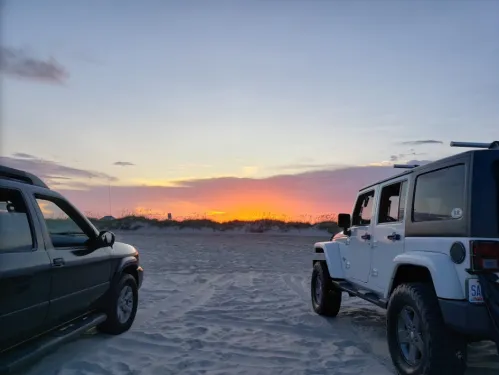
If you want a spot on the North End during the summer, you best be in line before the roosters crow, because once they hit that magic number at the gate, Freeman Park shuts tighter than a drum, and you’ll be left sitting in the dust wishing you’d packed a faster truck.
But listen here: the North End is also where you learn real quick that the Atlantic Ocean does not give a lick about your fancy Bluetooth speaker or your cooler full of seltzers. Every single year, someone misjudges the waterline and ends up with a saltwater-soaked interior and a very expensive lesson in humility.
When the weather is behaving and the tide is low, that North End feels like your own secret coastal kingdom. It is a place where you can park your Jeep at the very edge of the world, crack open a cold one, and watch the sun melt into the horizon while the pelicans skim the waves like they are on a mission from God. It is chaotic, it is beautiful, and it is absolutely worth experiencing at least once — preferably with someone who knows how to read a tide chart better than they read a menu.
Bonus, lots of great restaurants are nearby. Stop in and say hey.
Sand Driving Bucket List
If you ever get the itch to take those sand-driving skills of yours on a grand tour, you should know that Fort Fisher and Freeman Park aren’t the only spots in this great country where you can legally put rubber to the coastline. While we are partial to our own slice of heaven, there are a handful of other iconic “drive-on” beaches from sea to shining sea—each with its own personality and its own set of “don’t-you-dare” rules.
From the rugged dunes of the Outer Banks to the wide-open shores of the Gulf, here is where else you can let the air out of your tires and find a little bit of coastal freedom.
Ocracoke Island, North Carolina
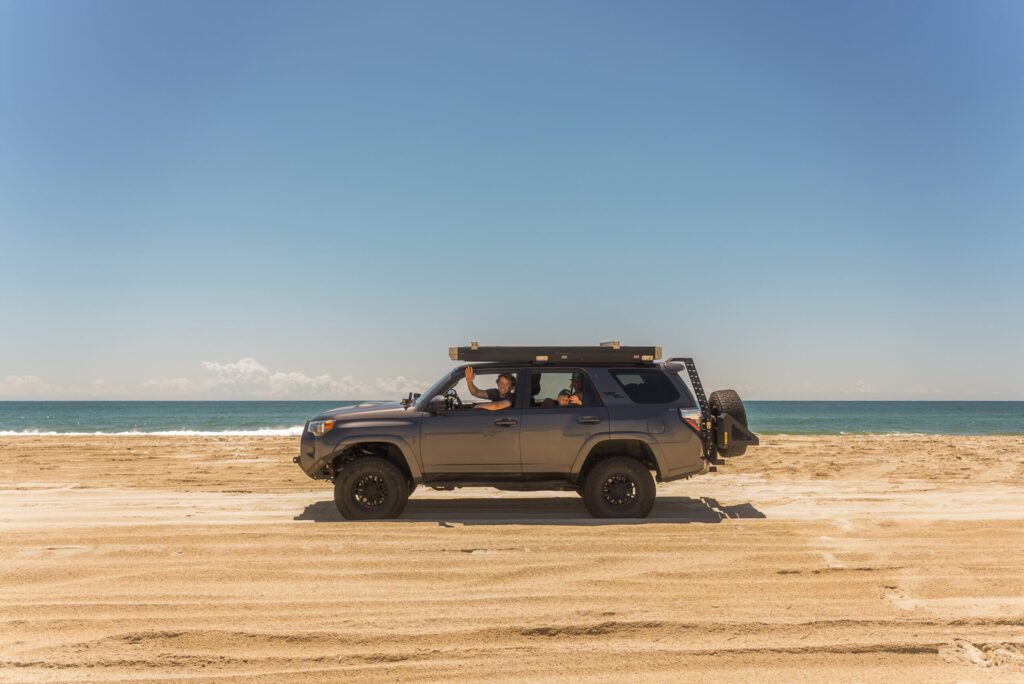
Part of the Cape Hatteras National Seashore, Ocracoke offers up miles of that wild, untouched shoreline where you can mosey right up to the surf without a care in the world. It feels like a step back in time—a little slice of the Outer Banks before the rest of the world went and got it all famous and crowded.
Daytona Beach, Florida
This here is the undisputed granddaddy of them all—the absolute OG of drive-on beaches. Now, Daytona is a sight flatter, wider, and a whole lot more “billboard-and-neon” than our wild North Carolina shores, but you cannot deny the history in that sand. There is just something mighty iconic about cruising your own rig along the very same stretch where those early NASCAR legends used to trade paint and pray for traction. It is less of an off-road expedition and more of a slow-motion victory lap, provided you do not mind sharing the “track” with a thousand sun-baked tourists and a stray minivan or two.
Oregon Dunes National Recreation Area, Oregon
Now, if you are looking to feel like you have gone and traded your zip code for a spot on the surface of Mars, this is your destination. We are talking towering dunes, wide-open sand bowls, and an off-road culture that leans so far into “extreme sports” it is practically falling over. It is the kind of place where the engines are loud, the flags are flying high, and everyone is just a little bit “sand-crazy” in the best way possible. Out there, “taking it slow” is a foreign concept, and if you are not careful, you might just find yourself catching more air than a seagull on a draft.
Pismo Beach, California (Oceano Dunes)
The Oceano Dunes State Vehicular Recreation Area is one of the last remaining spots on the West Coast where you can legally put your tires to the tide, making it a true bucket-list destination for any red-blooded off-roader. Now, you have to stay on your toes with this one, because those access rules shift faster than a dune in a gale thanks to all the environmental protections. It is a beautiful, wind-swept playground, but you best check the gate report before you go hauling your rig across the country, or you might find yourself staring at a “Closed” sign and a very disappointed cooler.
Assateague Island, Maryland/Virginia
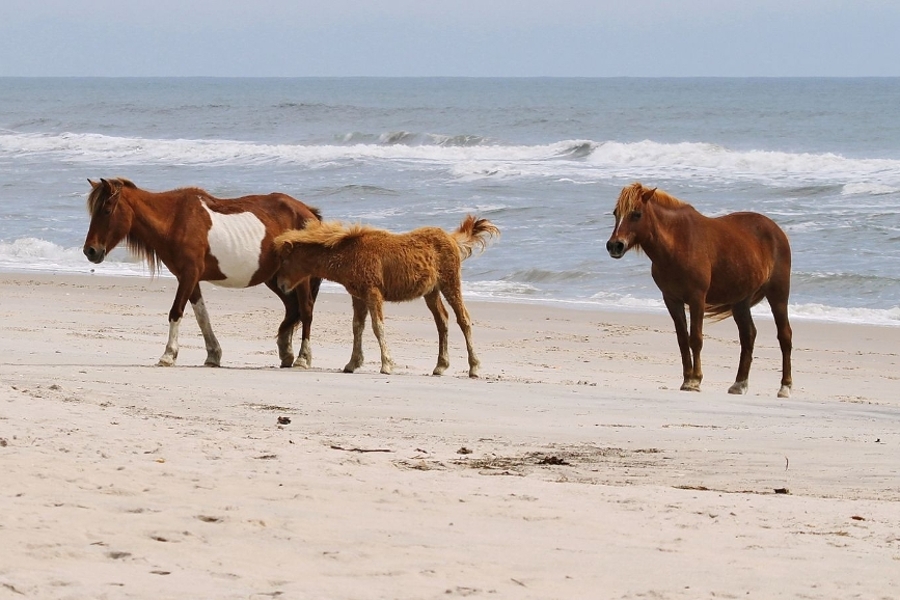
If you are looking for a place where the only neighbors you’ll have are the four-legged kind, this is your Hallelujah. We are talking wild horses, remote stretches of sand that feel like the edge of the world, and a permit system that keeps the riff-raff down to a dull roar.
It is rugged, it is quiet, and it is just about perfect for folks who want a little bit of solitude to go along with their sand driving. Out there, the only thing louder than the Atlantic is the sound of your own heartbeat—and maybe the occasional whinny from a stallion who thinks your Jeep is encroaching on his beachfront property. It is the kind of peace and quiet that’ll make you forget what a paved road even looks like.
The Gospel of the Grains
If you’re looking for something to do, these 4WD beaches are some of the last places on where you can still feel that raw, unpolished, and slightly dangerous thrill of the coast. This isn’t some safe and sanitized “family-friendly beach day with poolside bar service” you see in those glossy travel brochures.
It is a whole lot better.