

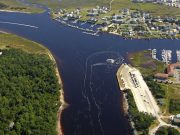

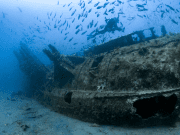
Quick look at the coastal Carolina Mystery
Along the sweeping curve of the North Carolina coastline, there is a long history of the mystery of the Seneca Guns—from the Outer Banks down through Cape Lookout, Topsail Island, and the Cape Fear region—residents have long been startled by sudden, unexplained booms known as the Seneca Guns. These powerful blasts can rattle windows, shake homes, and send pets scrambling for cover, yet no visible source ever appears. The phenomenon is so tied to the coast that many longtime locals say you can live inland your whole life without hearing one, but spend a single season near the water and you’ll eventually experience the unmistakable jolt.
A Coastal Mystery Rooted in Local History
Reports of the Seneca Guns stretch back to the mid‑1800s, long before modern aircraft or military testing could be blamed. They are most commonly heard in coastal communities such as Wilmington, Carolina Beach, Kure Beach, Southport, Oak Island, and the barrier islands near Cape Hatteras, though accounts have come from nearly every stretch of shoreline.
Despite their intensity on land, the booms are never heard offshore, even by fishermen and mariners who spend their days on the open water. That contradiction has only deepened the mystery.
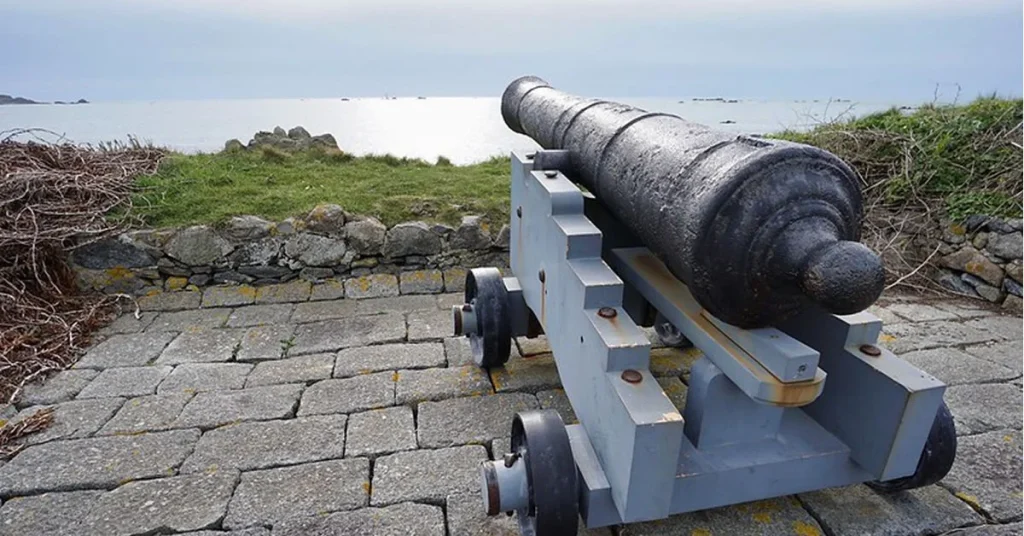
The name “Seneca Guns” has its own disputed origin. Some believe it comes from similar booms heard around Seneca Lake in New York, while others tie it to Civil War cannon fire near Seneca, Georgia. Whatever the origin, the name has become part of coastal Carolina folklore.

Theories as Wide as the Coastline Itself
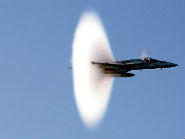
Residents along the coast have offered countless explanations over the years. Some swear the sounds resemble distant artillery from Camp Lejeune or Fort Bragg, though the phenomenon predates both. Others point to offshore earthquakes, shifting sandbars, or atmospheric pressure changes rolling in from the Atlantic.
The booms tend to occur more often in the fall, especially when the first cool fronts sweep across the warm coastal waters. Locals from the Outer Banks to Brunswick County often describe the sensation as a “deep, rolling thud” that seems to come from everywhere and nowhere at once.
Scientific Investigations Along the Shore
Modern research has taken advantage of the dense network of seismic and infrasound stations across the Southeast. Scientists have compared IRIS infrasound and seismic data with eyewitness accounts and media reports from coastal communities, especially around Cape Fear, where the phenomenon is most frequently documented.
In several cases, the booms coincided with detectable infrasound waves and ground‑coupled acoustic signals, suggesting that at least some events have a measurable physical source. Researchers are now using ECMWF atmospheric models, acoustic ray tracing, and waveform modeling to estimate where the sounds originate. The challenge lies in the region’s atmospheric conditions: low acoustic velocities over the warm Atlantic make it difficult to match signals across long distances.
Earlier studies have also focused on the coastline. A 2001 borehole seismograph installed near Fort Fisher attempted to detect micro‑earthquakes beneath the coastal plain but found no conclusive evidence. In 2005, the N.C. Geological Survey suggested shallow offshore quakes as the most likely explanation, though seismographs have never confirmed a direct link.
A Global Phenomenon With a Carolina Accent
While the Seneca Guns are deeply tied to North Carolina’s shoreline, similar unexplained booms occur around the world, including the Barisal Guns in India and Bangladesh, Uminari in Japan, and Mistpouffers along the coasts of the Netherlands and Belgium. Each region has its own theories, but none have reached a definitive answer.
Still No Final Explanation
Despite decades of reports and increasingly sophisticated scientific tools, the true cause of the Seneca Guns remains unknown. What is clear is that the phenomenon is woven into the identity of the North Carolina coast. Ask residents of Carolina Beach, Emerald Isle, or Nags Head, and many will recall the first time their house shook from a mysterious boom—followed by the realization that no storm, aircraft, or explosion was responsible.
For now, the Seneca Guns remain one of the most enduring mysteries of the Atlantic coastline, echoing unpredictably across beaches, marshes, and barrier islands. And until science catches up with the sound, the legend will continue to roll in with the tide.